
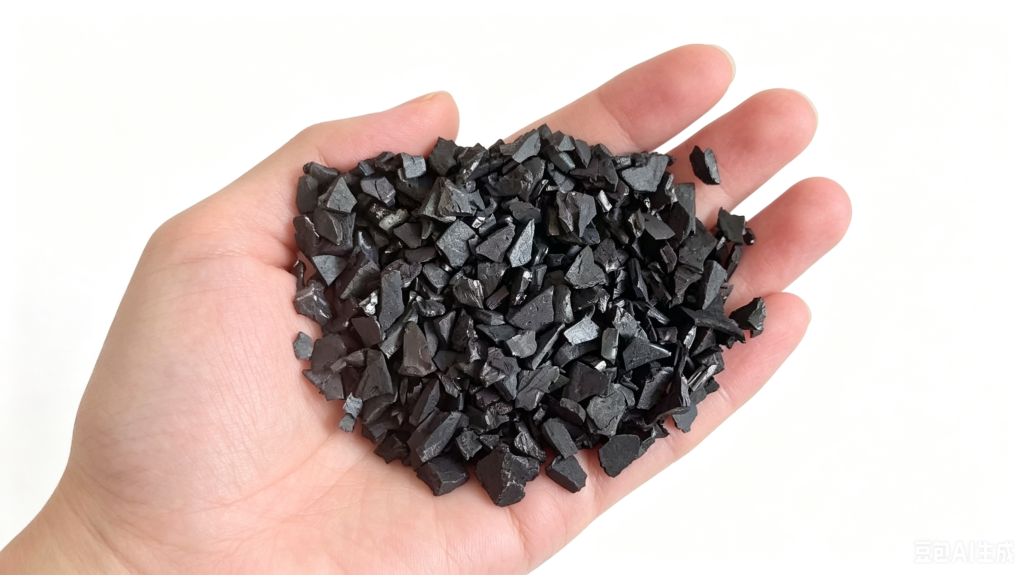
Coconut shell activated carbon is a “gold absorbing tool” for gold extraction – its pore structure is designed specifically for gold absorption, with an adsorption capacity several times that of ordinary carbon. It is wear-resistant, durable, recyclable, selectively adsorbs gold ions, has fewer impurities, and higher purity. Choosing the right coconut shell charcoal can increase the recovery rate by 1% -3%, making it easy to earn hundreds of thousands more in a year. In the gold recycling, e-waste gold extraction, and mining heap leaching gold extraction industries, there is an indispensable core consumable – coconut shell activated carbon. Many friends who have just entered the industry will ask: Why do coconut shell activated carbon have to be used for gold extraction when charcoal, coal based charcoal, and fruit shell charcoal are all cheap? Today’s article is not about exaggeration, but about what industry professionals truly care about: principles, advantages, how to choose, and avoiding pitfalls. After reading it, you will know why it is a “gold suction tool” for gold extraction. There are many types of charcoal on the market, but only high-grade coconut shell activated carbon can be stably used for gold extraction.
Coconut shell activated carbon made from high-quality coconut shell raw materials – gold extraction specific activated carbon, mineral treasure coconut shell activated carbon, with balanced iodine value and stable particle size, strong ability to adsorb gold ions, and high gold extraction efficiency. With these characteristics, coconut shell activated carbon has gradually become the core material for purifying gold in gold mining, and the key skill is precise adsorption of gold. Coconut shell activated carbon, with its large specific surface area and strong adsorption, can efficiently capture gold ions and achieve gold enrichment. Subsequently, high-purity gold can be extracted from activated carbon through analysis and smelting. This process is widely used in the global gold mining industry due to its low cost and high efficiency.
A good type of activated carbon for adsorbing gold is coconut shell activated carbon. It has a high capacity and rate for adsorbing gold, as well as high strength. Coconut shell activated carbon is commonly used abroad. Due to the limited availability of coconut shell raw materials in China, we are currently seeking alternative shell materials that can replace coconut shells, such as peach pits, apricot pits, walnut shells, camellia shells, oil palm pits, and blackcurrant seed shells.
The physical and adsorption properties of domestically produced coconut shell activated carbon have reached the level of imported coconut shell activated carbon. However, due to limited coconut shell resources in China, alternatives have to be sought. A few years ago, a wood factory in Beijing successfully developed apricot kernel activated carbon, which has various indicators close to coconut shell activated carbon and has a lower cost than coconut shell activated carbon. In 1991, the Chinese Academy of Forestry also conducted experimental research on the production of amorphous granular activated carbon from peach kernels, and compared various indicators of apricot kernel carbon, coconut shell carbon, peach kernel carbon, and walnut shell carbon. The results showed that the adsorption capacity of coconut shell activated carbon and peach kernel carbon was second only to walnut shell carbon, and apricot kernel carbon was lower. Experimental results have shown that peach kernel industry is an excellent raw material for producing amorphous granular activated carbon. It is widely distributed in China, with large production and easy collection. Therefore, using peach kernels as raw materials can promote the promotion and use of activated carbon adsorption gold extraction method in China.
The amount of gold adsorbed by coconut shell activated carbon in cyanide gold solution is 7700g/t for charcoal, and 6860g/t for apricot kernel charcoal. Apricot kernel charcoal has a faster adsorption rate for gold than coconut shell activated charcoal. After adsorbing apricot kernel charcoal, domestic coconut shell charcoal, and imported coconut shell charcoal in cyanide gold slurry under the same conditions for 2 hours, it was found that the gold content of the apricot kernel charcoal tailings was below 7mg/l; Domestic coconut shell charcoal tail liquid is below 9mg/l; The imported coconut shell activated carbon tail liquid is 12mg/l. Among them, the gold content in the tail liquid of apricot kernel charcoal is low, the gold recovery rate is high, and the adsorption performance of apricot kernel charcoal for gold is close to that of coconut shell charcoal. Therefore, apricot kernel charcoal is a substitute for coconut shell charcoal.
Coconut shell activated carbon has three key advantages:
1、 Ultra large specific surface area: adsorption capacity much higher than ordinary charcoal and coal based charcoal
Developed mesopores: gold ions are easier to enter and firmly locked in
Reasonable pore size distribution: the highest adsorption efficiency for gold cyanide complexes
Simply put, for the same kilogram, coconut shell charcoal can absorb several times more gold than regular charcoal.
2、 In the process of extracting gold without losing powder, coconut shell charcoal has high strength, wear resistance, and can be reused for a long time. In the charcoal slurry tank, it is stirred at high temperature and high pressure for desorption and repeated acid washing, and regenerated ordinary charcoal is crushed and powdered as soon as stirred and washed. Coconut shell charcoal has high wear resistance and can be reused multiple times. In the long run, it is actually more cost-effective.
3、 Good selectivity: Only absorbs gold, with minimal impurities. The coconut shell charcoal for gold extraction has extremely strong selectivity for gold adsorption and will not adsorb large amounts of impurities such as copper, zinc, and iron in the solution. The benefits are direct: higher gold loading, easier desorption, simpler subsequent purification, and higher purity of finished gold
4、 Suitable for industrial continuous production
Mining, electronic waste recycling, and electroplating plant gold extraction are all large-scale and continuous operations. Coconut shell activated carbon has stable performance and can adapt to:
Carbon Slurry Process (CIP)
Heap leaching method (CIL)
Electrolytic gold extraction
Analyze the complete set of electrolytic equipment
It is currently the most mature and versatile adsorbent material for industrial gold extraction.
If you do the following businesses, coconut shell charcoal is essential:
Extracting gold from electronic waste (circuit boards, CPUs, memory modules, gold-plated parts)
Electroplating/Jewelry Factory Waste Liquid Recycling Gold
Mining gold heap leaching, pool leaching, and coal slurry gold extraction
Gold extraction from waste catalysts, gold plating waste, and contact waste
Not using coconut shell charcoal, common consequences:
The gold absorption is not clean, and the tail liquid contains high gold content
The recycling rate cannot be improved, and profits are lost in vain
Carbon loss is high, but the cost is actually higher
High impurities, difficult melting, low purity
I don’t want to fall into a trap, so when making purchases, I only focus on these few indicators:
The higher the iodine value ≥ 1000 mg/g, the stronger the adsorption capacity.
Strength ≥ 95%, wear-resistant and powder free, recyclable.
Uniform particle size (commonly 6 × 12 mesh/8 × 16 mesh) is suitable for equipment screening, flow, and adsorption.
Low ash content and minimal impurities to avoid interference with gold extraction and affect purity.
Summary in one sentence: Coconut shell activated carbon=high gold extraction efficiency+large gold loading capacity+wear-resistant and durable+good selectivity+suitable for industrialization.
In the gold refining industry, it is not an “optional” material, but a core material for cost reduction, yield recovery, and stable production.
If you are:
Newly entered gold withdrawal practitioners
Electronic waste recycling and processing plant
Mine/Gold Plating Recycling Manager
Choose the right coconut shell activated carbon,
A 1% -3% increase in recycling rate results in a difference of several hundred thousand yuan per year.