
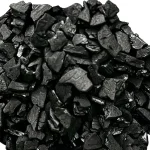
Coconut shell activated carbon is made from high-quality coconut shells through a series of production processes. It appears black and granular, and possesses advantages such as well-developed pores, good adsorption performance, high strength, easy regeneration, and economic durability. However, due to issues such as the origin of coconut shells, its price is higher than that of conventional wooden activated carbon.
Iodine value: 900, 1000, 1100, 1250
Specifications: 1-2mm, 2-4mm, 3-5mm, 5-8mm
Coconut shell activated carbon has a wide range of applications, primarily in four major fields: water treatment, air purification, industrial purification, and food decolorization. It can effectively adsorb impurities, odors, and harmful substances, making it a common material for water purifiers, formaldehyde removal bags, and industrial filtration.
Water treatment and beverage purification
Drinking water treatment: commonly used in household water purifiers, waterworks, and bottled water production to remove residual chlorine, odor, and organic matter.Industrial wastewater purification: applicable to decolorization, deodorization, and heavy metal ion adsorption of industrial wastewater from processes such as electroplating and printing and dyeing.
High-purity water preparation: Used for preparing high-purity water in the electronics industry, beer production, and beverage manufacturing.
Air and odor treatment
Home air purification: It can adsorb formaldehyde and benzene derivatives in newly renovated houses, and is used for deodorization and mold prevention in wardrobes, refrigerators, and bathrooms.Odor removal in vehicles and equipment: Used for automobile exhaust treatment, air conditioning system filtration, and computer radiation gas adsorption.
Industrial waste gas treatment: Treat organic solvent gases and sulfides emitted by chemical plants and tanneries.
Industrial and special-purpose
Precious metal extraction: The heap leaching or carbon-in-pulp gold extraction process specifically used in the gold metallurgical industry.
Food and pharmaceutical decolorization: Used for decolorizing and refining monosodium glutamate, citric acid, and alcoholic beverages, as a processing aid rather than being added directly.
Safety protection: Filled in gas masks and cigarette filters to adsorb toxic and harmful substances.