
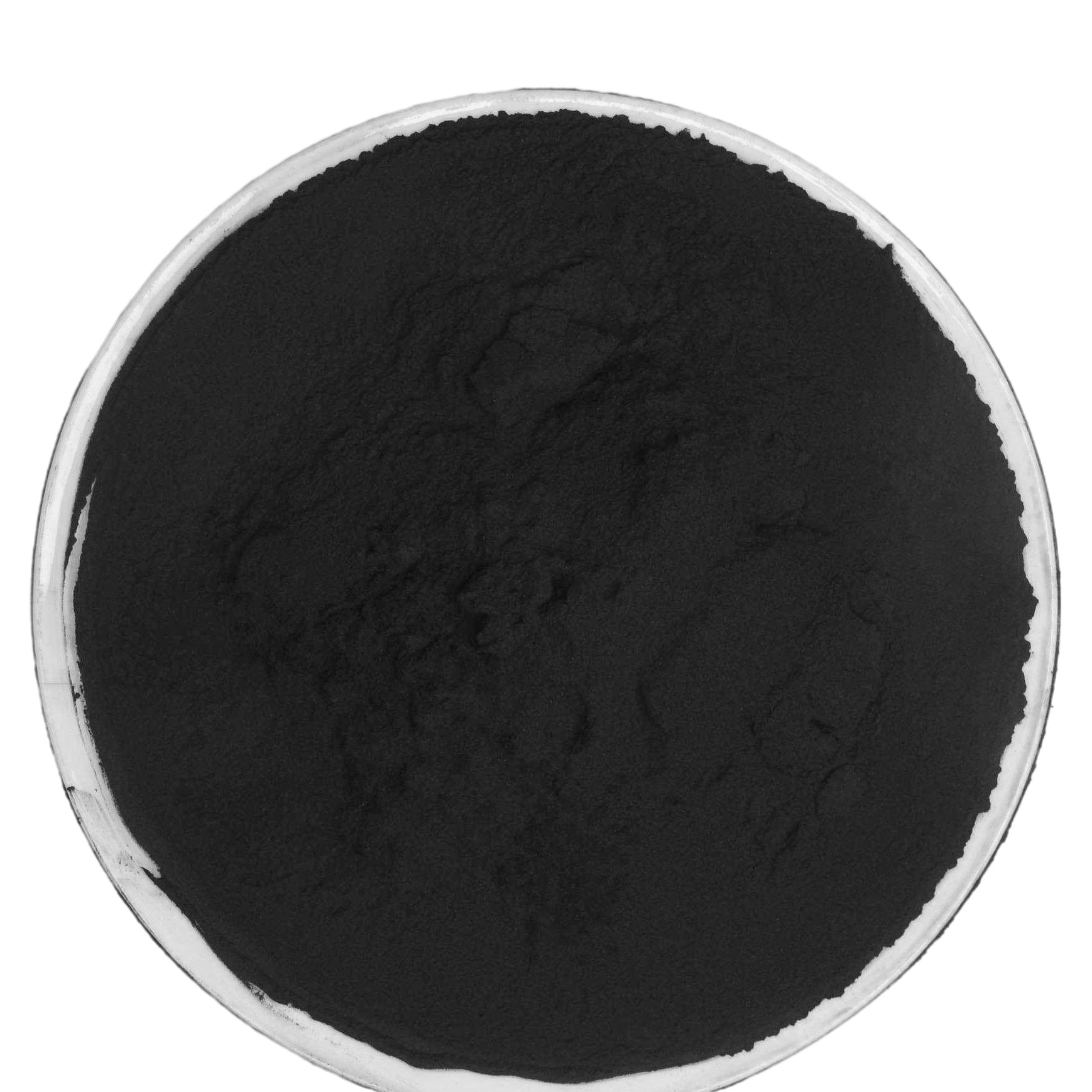
Powdered activated carbon
Powdered activated carbon is produced through a series of refined processes using high-quality raw materials such as sawdust, coconut shells, and coal. This activated carbon boasts advantages such as fast filtration speed, excellent adsorption performance, strong decolorization and odor removal capabilities, as well as being economical and durable. Its products are widely used in various industries, including food, beverage, pharmaceuticals, tap water, sugar, and oil. Additionally, it is also commonly applied in fields such as wine making, wastewater treatment, power plants, and electroplating.
Iodine value: 300, 400, 500, 600, 800, 1000, 1200
Specifications: 100 mesh, 200 mesh, 325 mesh
Product Introduction
Powdered activated carbon is produced through a series of sophisticated processes using high-quality raw materials such as sawdust, coconut shells, and coal. This activated carbon boasts advantages such as fast filtration speed, excellent adsorption performance, strong decolorization and odor removal capabilities, as well as being economical and durable. Its products are widely used in various industries including food, beverage, pharmaceuticals, tap water, sugar, and oil. Additionally, it is also commonly applied in fields such as wine making, wastewater treatment, power plants, and electroplating.
Wood powdered activated carbon is made from high-quality fruit shells and wood chips. After steam activation, it undergoes refined processing and is crushed into a black, fine powder. It is non-toxic, odorless, and possesses a large specific surface area and strong adsorption capacity. Coal powdered activated carbon is produced from high-quality coal and coke through carbonization and activation processes. The finished product exhibits excellent adsorption capacity and low impurity content.
- Activated carbon for beverages features a well-developed mesoporous structure, high adsorption capacity, and rapid filtration. It is primarily suitable for the purification of various beverages such as colas, juices, and alcoholic drinks, as well as drinking water.
- Activated carbon for water treatment is widely used in tap water treatment and wastewater treatment due to its excellent porous structure and strong adsorption and decolorization capabilities.
- Activated carbon for food and food additives boasts a large specific surface area, exhibiting exceptionally strong adsorption capacity and stable performance indicators. It is primarily utilized in the decolorization, purification, deodorization, and impurity removal of high-pigment solutions in areas such as sugars, oils, food additives, chemical auxiliaries, fuel intermediates, and pharmaceutical preparations.
- Amino acids (MSG) are widely used in various amino acid industries, such as the decolorization, purification, deodorization, and impurity removal of sodium glutamate, phenylalanine, and other amino acid products, due to the reasonable pore structure, large adsorption capacity, strong decolorizing ability, and fast filtration speed of activated carbon.
- Injection and medicinal activated carbon have few impurities, high purity, and fast filtration speed, exhibiting excellent decolorization, purification, and refining performance. They are mainly used for decolorization, refining, and heat removal of various injection drugs, as well as for decolorization and refining of vitamins and other active pharmaceutical ingredients (APIs) and intermediates.
- Activated carbon for electroplating boasts advantages such as a large specific surface area, strong adsorption capacity, high mechanical strength, numerous surface oxygen groups, and high reactivity. It finds applications in various fields, including the purification of electroplating solutions, treatment of chromium electroplating wastewater, and treatment of cyanide-containing wastewater.
- The activated carbon used for waste incineration is made from wood or coal, with a reasonable pore structure. It exhibits excellent adsorption capacity for pollutant gases such as dioxins produced during waste incineration, and is widely used in the fields of waste-to-energy generation and solid waste incineration treatment.
- Activated carbon is a porous adsorbent, so it is crucial to prevent water immersion during transportation, storage, and use, as water immersion will fill the active pores with a large amount of water, rendering it ineffective.
- During the use of activated carbon, tar-like substances should be prohibited from entering the activated carbon bed to avoid blocking the pores of the activated carbon and causing it to lose its adsorption function.
- When storing or transporting activated carbon, direct contact with ignition sources should be avoided to prevent ignition.

Engineering Case
inquiry
If you wish to submit a formal inquiry, please complete the following form.
Note: Fields marked with * are required.