
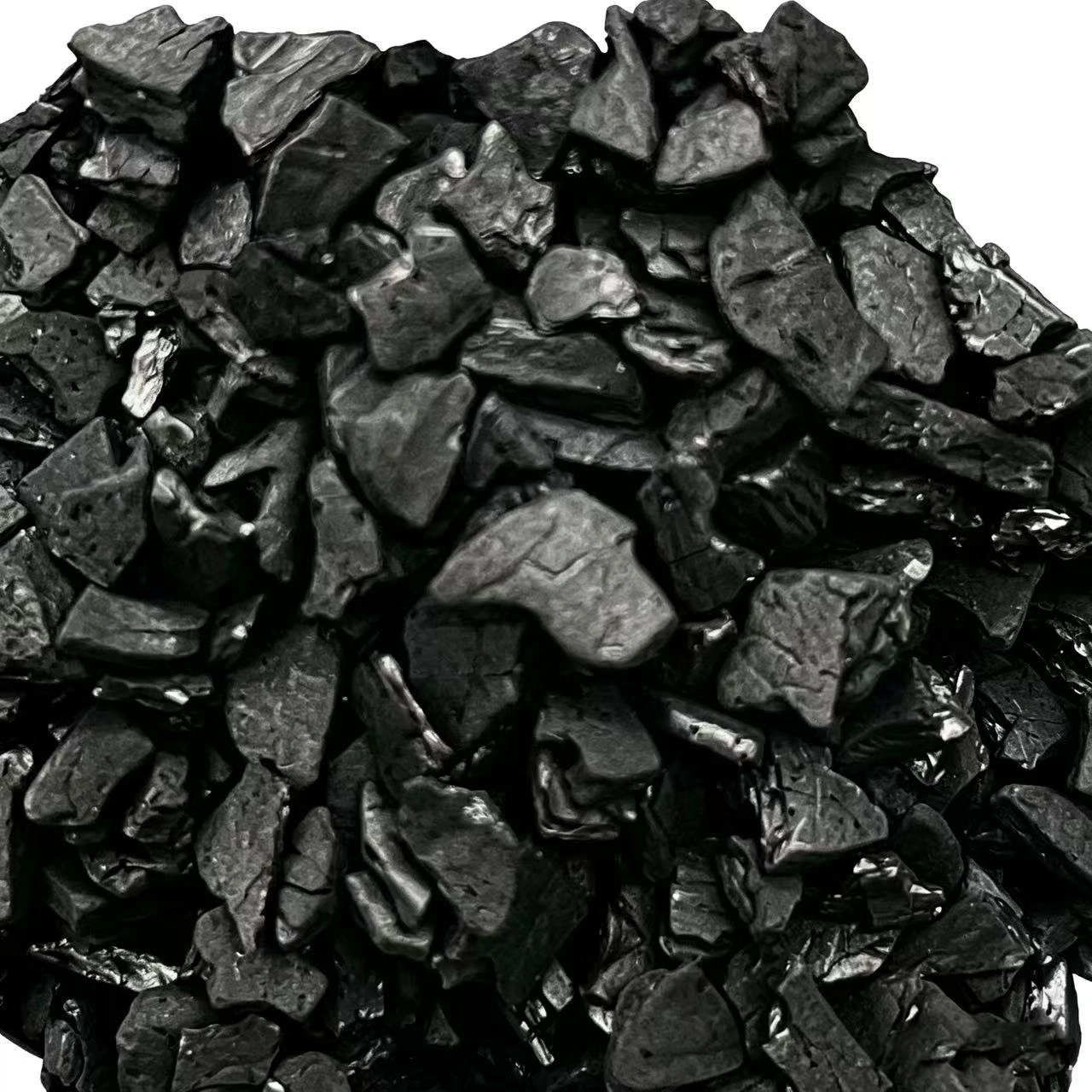
Coconut shell activated carbon
Coconut shell activated carbon is made from high-quality coconut shells through a series of production processes. It appears black and granular, and possesses advantages such as well-developed pores, good adsorption performance, high strength, easy regeneration, and economic durability. However, due to issues such as the origin of coconut shells, its price is higher than that of conventional wooden activated carbon.
Iodine value: 900, 1000, 1100, 1250
Specifications: 0.5-1mm,1-2mm, 2-4mm, 3-5mm, 5-8mm
Product Introduction
Coconut shell activated carbon is made from high-quality coconut shells through a series of production processes. It appears black and granular, and possesses advantages such as well-developed pores, good adsorption performance, high strength, easy regeneration, and economic durability. However, due to issues such as the origin of coconut shells, its price is higher than that of conventional wooden activated carbon.
High-quality coconut shell activated carbon; 2. Activated carbon for gold extraction; 3. LC-type activated carbon specifically designed for removing free chlorine; 4. RJ-type activated carbon dedicated for solvents; 5. ZH-03 granular sugar carbon (physical method); 6. 1. Silver-loaded activated carbon; 2. Special activated carbon for decolorizing monosodium glutamate; 3. ZH-05 type activated carbon as a catalyst carrier for vinylon.
- Coconut shell granular activated carbon is commonly used in gas phase adsorption, where gas flow is typically passed through the activated carbon layer for adsorption. Depending on the state of the activated carbon layer in the adsorption device, there are several types of adsorption layers, including fixed layer, moving layer, and fluidized layer. However, in small adsorbers such as deodorizers in refrigerators and automobiles, adsorption relies on gas convection and diffusion. In addition to granular activated carbon, activated carbon fibers and activated carbon molded products are also increasingly being used in gas phase adsorption.
- The air in instrument rooms, air conditioning rooms, basements, and subsea facilities often contains body odor, smoking odor, cooking odor, oil, organic and inorganic sulfur compounds, corrosive components, etc., due to external pollution or the influence of human activities in enclosed environments. This can cause corrosion of instruments and affect human health. Activated carbon can be used for purification to remove impurities.
- Coconut shell activated carbon can be used to adsorb gases emitted from chemical plants, tanneries, paint factories, and projects involving various organic solvents. These gases contain various organic solvents, inorganic and organic sulfides, hydrocarbons, chlorine, oil, mercury, and other environmentally harmful components. The gases can be adsorbed by activated carbon before being discharged. Gases emitted from atomic energy facilities contain radioactive substances such as krypton, xenon, and iodine, which must be adsorbed cleanly by activated carbon before being discharged. The flue gas generated by the combustion of coal and heavy oil contains sulfur dioxide and nitrogen oxides, which are harmful components that pollute the atmosphere and contribute to acid rain. Activated carbon can also be used to adsorb and remove these components.
- There are numerous use cases for coconut shell activated carbon in refining gases, such as gas masks, cigarette filters, refrigerator deodorizers, and automobile exhaust treatment devices. These all leverage the excellent adsorption performance of activated carbon to remove toxic, harmful, or odoriferous components from gases. For instance, by adding 100-120 mg of activated carbon to cigarette filters, a significant portion of harmful components in cigarette smoke can be removed.
- Sweetening activated carbon: used as the carrier for the catalyst for gasoline sweetening (deodorization) in catalytic units of oil refineries.
- Vinylon-based activated carbon catalyst: Used in the chemical industry as a catalyst carrier, such as for vinyl acetate catalysis.
- Activated carbon for MSG refining: It is used for decolorization and refining of the mother liquor in the production process of MSG, and can also be used for decolorization and refining of fine chemical products.
- Activated carbon specifically for cigarette filters: Used in cigarette filters in the tobacco industry to remove toxic and harmful substances such as tar and nicotine from cigarettes.
- Activated carbon dedicated to citric acid: used for decolorization, refining, and odor removal of various acids such as citric acid, amino acids, and cysteine.
- Activated carbon for direct drinking water treatment: Activated carbon is used for deep water purification in household direct drinking water, water treatment in waterworks, and the production of bottled water.
In situations where coconut shell activated carbon contains moisture or is exposed to humidified gas, its adsorption rate for organic solvents generally decreases. However, by using coconut shell activated carbon that maintains considerable adsorption capacity even in a wet state, it can still be used for recovery under conditions that were previously unsuitable for recovery, and it can also save the use of steam. Especially in solvent recovery situations where heat generation due to oxidation and decomposition is possible, humidifying the adsorbed gas can control the temperature rise of the coconut shell activated carbon layer, control the occurrence of reactions, and prevent ignition. This becomes an important condition for selecting coconut shell activated carbon when recovering ketone solvents. The breakthrough curve for acetone adsorption by dry and wet coconut shell activated carbon is different; breakthrough time is also one of the indicators of the adsorption capacity of coconut shell activated carbon.

Engineering Case
inquiry
If you wish to submit a formal inquiry, please complete the following form.
Note: Fields marked with * are required.