
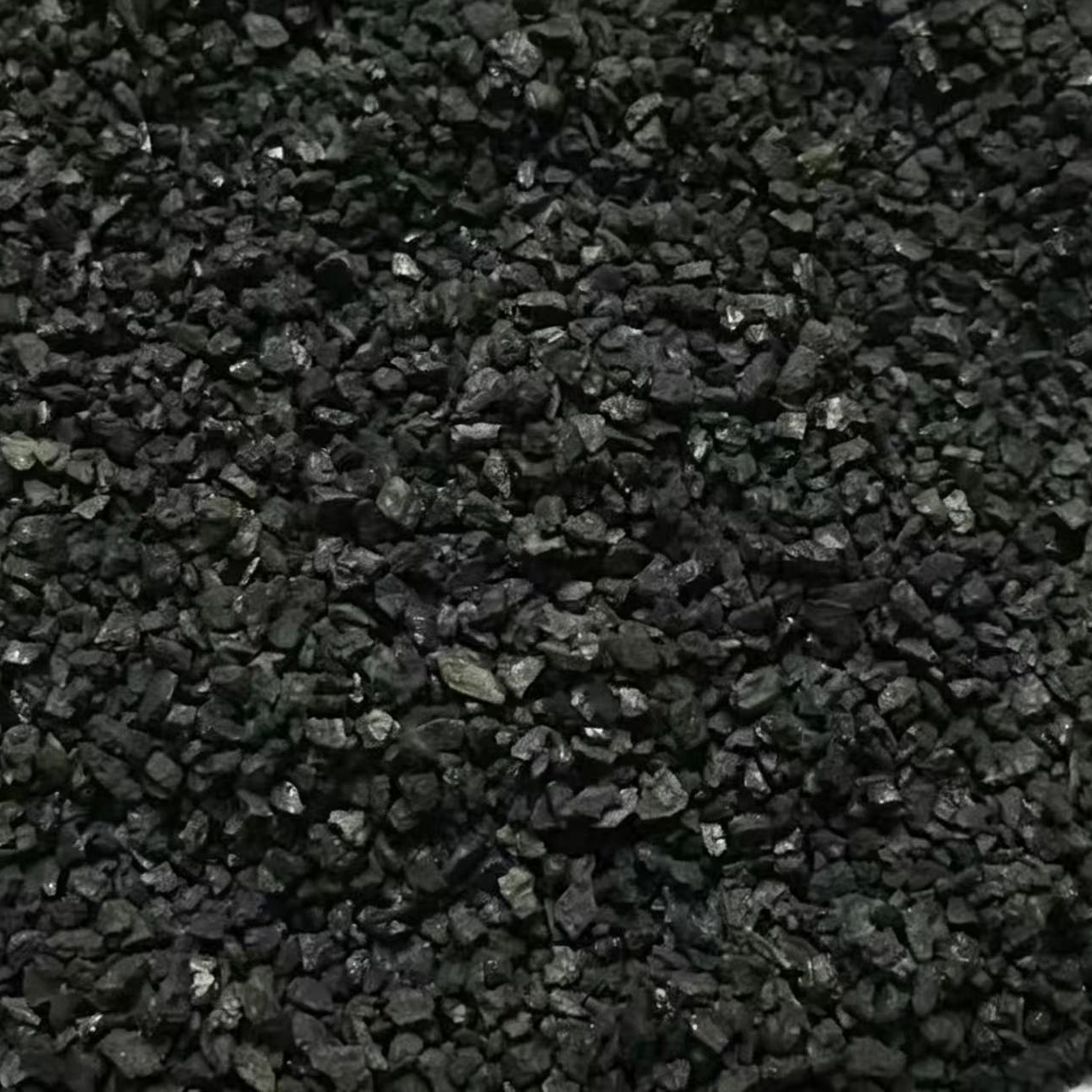
Coal-based activated carbon
Coal-based activated carbon is produced through a series of processes including carbonization, cooling, activation, and washing. Its appearance is generally black cylindrical activated carbon, and it is also known as amorphous coal granular activated carbon, also referred to as crushed carbon. Cylindrical activated carbon, also known as columnar carbon, is generally made from powdered raw materials and binders through kneading, extrusion molding, carbonization, activation, and other processes. It can also be made by extruding powdered activated carbon with a binder. It has characteristics such as a developed pore structure, good adsorption performance, high mechanical strength, easy repeated regeneration, and low cost; it is used for the purification of toxic gases, waste gas treatment, purification and treatment of industrial and domestic water, solvent recovery, and other aspects.
Coal-based columnar activated carbon, raw coal-like activated carbon in broken particles, and coal-based powdered activated carbon
Iodine value: 300, 400, 500, 600, 800, 1000, 1200
Specification: Columnar: 1.5~8㎜; Granular: 1-2, 2-4, 4-6; Powder: 100 mesh, 200 mesh, 325 mesh
Product Introduction
Coal-based activated carbon is produced through a series of processes including carbonization, cooling, activation, and washing. Its appearance is generally black cylindrical activated carbon, also known as amorphous coal granular activated carbon, also referred to as crushed carbon. Cylindrical activated carbon, also known as columnar carbon, is typically made from powdered raw materials and binders through kneading, extrusion molding, carbonization, activation, and other processes. It can also be made by extruding powdered activated carbon with a binder. It features a developed pore structure, good adsorption performance, high mechanical strength, easy repeated regeneration, and low cost; it is used for the purification of toxic gases, waste gas treatment, purification and treatment of industrial and domestic water, solvent recovery, and other aspects.
Coal-based columnar activated carbon; 2. Crushed raw coal granular activated carbon; 3. Coal-based powdered activated carbon
- Coal-based columnar activated carbon: It is widely used in solvent recovery, industrial waste gas purification, protective equipment, home air purification, raw water purification in power plants, pure water treatment, water treatment in electronics factories, chemical pigment industries, food and pharmaceutical factories, as well as biological carriers in sewage treatment plants, waste gas treatment in factories and garbage dumps, reclaimed water reuse, marine aquaculture and seedling cultivation. It can also be used in pure water manufacturing, sewage treatment, biological carriers in sewage, marine aquaculture, cold storage preservation, and air purification in factories
- Crushed raw coal granular activated carbon: It is suitable for raw water purification in power plants, especially for filtration and purification of chemical wastewater, as well as for chlorine treatment of brackish water used in power plant boilers, showing excellent treatment effects. It is also used in soil improvement projects such as golf courses
- Coal-based powdered activated carbon: It is primarily suitable for tap water purification, used to adsorb organic matter, residual chlorine, and off-odors in raw water, reduce turbidity, improve taste, and make it meet drinking water standards. This product also has good treatment effects in the wastewater treatment industry.
- During transportation, activated carbon should be prevented from mixing with hard substances and should not be stepped on or trampled to avoid crushing the carbon particles and affecting its quality.
- The storage should be done with porous adsorbents. Therefore, during transportation, storage, and use, water immersion should be avoided, as a large amount of water filling the active pores will render them ineffective.
- To prevent tar-like substances from blocking the pores of activated carbon and rendering it ineffective in adsorption during use, it is necessary to prohibit the introduction of tar-like substances into the activated carbon bed. A decoking device should be installed to purify the gas.
- When storing or transporting fire-resistant activated carbon, direct contact with ignition sources should be avoided to prevent ignition. During regeneration, oxygen should be avoided and the regeneration process should be thorough. After regeneration, the activated carbon must be cooled with steam to a temperature below 80°C. Otherwise, if the temperature is high and oxygen is present, the activated carbon may spontaneously combust.

Engineering Case
inquiry
If you wish to submit a formal inquiry, please complete the following form.
Note: Fields marked with * are required.